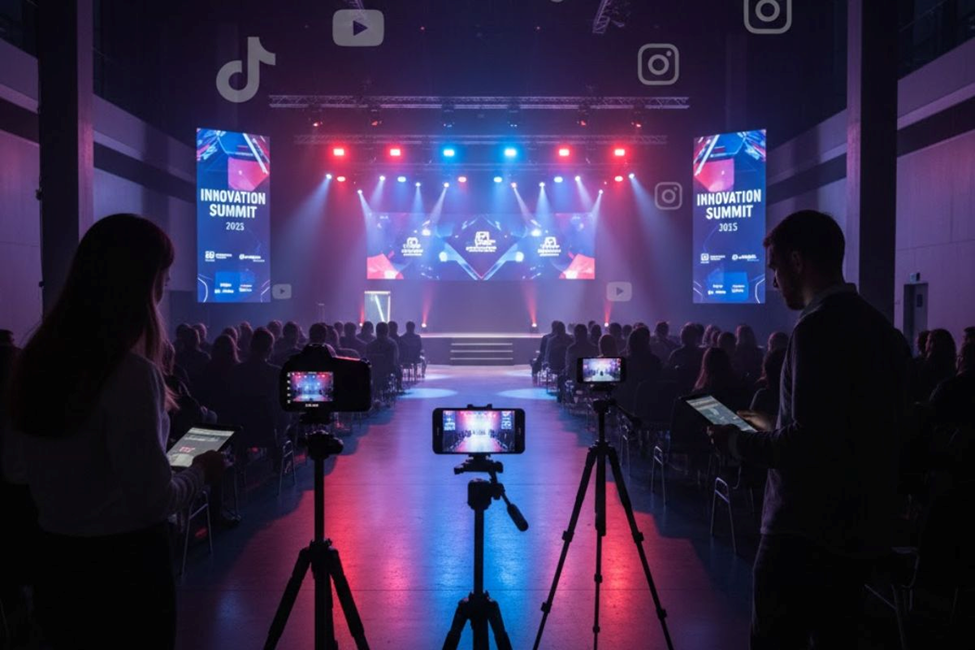
Video marketing has become essential for successful event promotion. Around 91% of businesses now use video as a marketing tool, and event organizers who leverage video content see significantly higher attendance rates. When you capture the energy of speakers, audience excitement, and memorable moments on video, you create promotional content that traditional marketing simply can’t match.
This comprehensive guide covers proven video marketing strategies for events at every stage. From creating pre-event promotional videos that drive ticket sales to live streaming your event for maximum reach, and producing post-event highlights that extend your impact—you’ll learn how to use video content to promote your event effectively.
Pre-Event Video Content: Building Anticipation and Boosting Event Attendance
Pre-event videos are your most powerful tool for increasing event attendance and generating excitement. According to Wyzowl, 91% of people want more video content from brands, making video promotion essential for event marketing success.
Start your event video marketing campaign early—ideally 6-8 weeks before your event. This timeline allows you to build momentum and maximize registration conversions.
Speaker Spotlight Videos for Event Promotion:
Create short speaker introduction videos that showcase your event’s value. A compelling two-minute video featuring your keynote speaker builds credibility and demonstrates the expertise attendees will experience. These promotional videos help potential attendees understand why your event is worth attending.
High-Impact Pre-Event Video Ideas
Event Highlight Reels: Showcase footage from previous events to give newcomers a taste of the experience. Highlight reel videos generate 51% more shares on social media compared to other content types, making them ideal for organic event promotion.
Speaker Announcement Videos: Record authentic, conversational videos where speakers discuss their upcoming sessions. This personal approach helps potential attendees connect with presenters before the event, increasing registration likelihood.
Attendee Testimonial Videos: Feature real testimonials from past participants. Keep testimonial videos under 60 seconds and focus on specific outcomes. Authentic experiences from previous attendees create powerful social proof that drives event registrations.
Creating an Event Trailer That Converts
An effective event trailer is your elevator pitch in video format. Create a 60-second promotional video that captures your event’s unique value proposition and compels viewers to register.
Platform-Specific Video Marketing Strategy:
- Instagram Reels, TikTok, YouTube Shorts: 30-60 seconds for maximum engagement
- LinkedIn: 1-2 minutes with professional, value-focused content
- YouTube: 3-5 minutes for detailed event previews
- Facebook: 60-90 seconds with strong hooks in the first 3 seconds
Personalized Video Marketing:
Send personalized video messages to registered attendees. Include exclusive previews, insider tips, and VIP content that makes registrants excited about attending. Personalization increases attendance rates and reduces no-shows.
Advanced Video Production Techniques:
Elevate your event promotion with drone footage for outdoor venues and multi-camera setups for speaker content. These production techniques create professional promotional videos that stand out in crowded social media feeds.
Strategic Content Timing:
- 6-8 weeks out: Speaker announcements and credibility-building content
- 4-6 weeks out: Previous event highlights and social proof videos
- 2-4 weeks out: Countdown content and urgency-driven promotional videos
- Final week: Behind-the-scenes teasers and last-chance registration reminders
Live Streaming Events: Maximize Reach and Future Attendance
Live streaming transforms your event promotion strategy by expanding reach beyond physical venue capacity. Platforms like Facebook Live, YouTube Live, and Instagram Stories allow you to connect with unlimited virtual attendees while promoting future events.
Research from Digital reveals that 30% of live stream viewers attend the physical event the following year, making live video a powerful tool for long-term event growth.
Essential Live Streaming Setup: Deploy a dedicated video team to capture keynote presentations, major announcements, and authentic attendee interactions. These candid moments between sessions tell your event’s story and provide valuable promotional content for future marketing.
User-Generated Content Strategy: Create an event-specific hashtag and encourage attendees to share their experiences. User-generated video content captures authentic moments your official team might miss and provides social proof for promoting future events.
Engaging On-the-Day Video Content
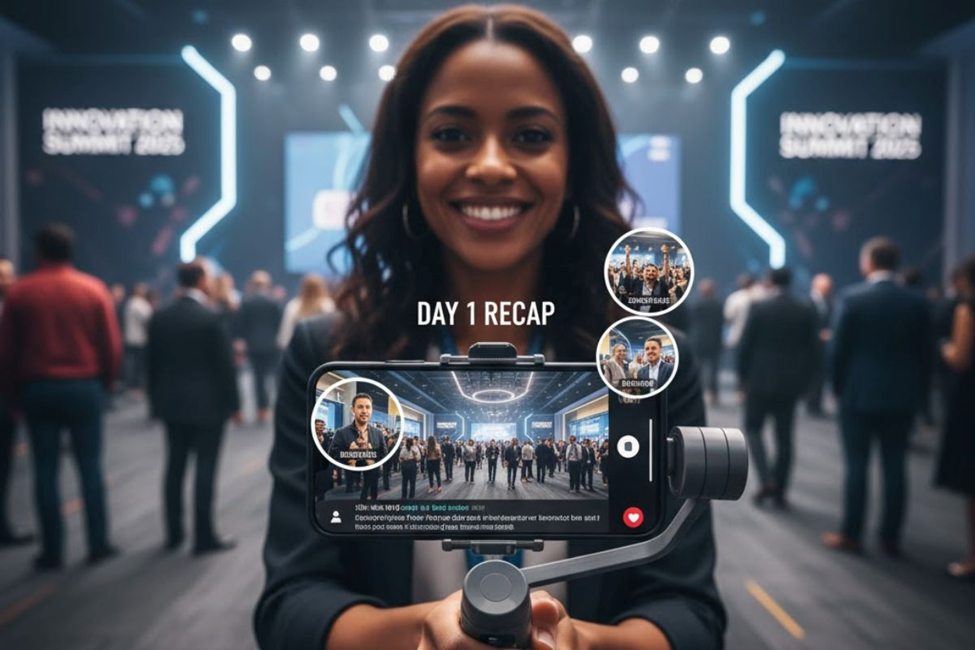
Virtual Venue Tours: Stream walk-throughs of your event space, giving remote viewers an immersive experience. Behind-the-scenes video content generates curiosity and promotes future attendance.
Interactive Live Q&A Sessions: Enable real-time interaction between speakers and both in-person and virtual audiences. Interactive video content increases engagement and creates memorable experiences worth sharing.
Daily Event Recap Videos: Produce energetic daily summaries featuring powerful moments, audience reactions, and key takeaways. These recap videos serve dual purposes: engaging current participants and promoting your event to non-attendees.
Content Repurposing: Save all live-streamed content for post-event marketing. Today’s live video becomes tomorrow’s most effective promotional material.
Post-Event Video Marketing: Extend Your Event’s Impact
Post-event video content transforms a single gathering into months of ongoing marketing value. Strategic post-event videos promote future events while nurturing your community and establishing authority.
The TED Model: TED conferences started in 1984, but sharing talks online in 2006 transformed them into a global phenomenon generating over $100 million in revenue. Your event videos can create similar lasting impact through strategic content distribution.
High-Converting Post-Event Video Content
Event Highlight Reels: Create compelling highlight videos that showcase your event’s best moments. Feature powerful presentations, genuine audience reactions, and unique experiences. These promotional videos show potential attendees exactly what they’ll experience at your next event.
Strategic Content Distribution:
- Social media clips: 15-30 second highlights optimized for each platform
- Full session recordings: Comprehensive content for YouTube and your website
- Email newsletter segments: Targeted clips that drive future registrations
Thank You Videos:
Send personalized thank-you videos to attendees. Express gratitude, share favorite moments, and tease your next event. This personal touch strengthens relationships and improves retention for future events.
Leverage User-Generated Content: Research shows 85% of consumers find user-generated videos more trustworthy than brand-created content. Encourage attendees to share their video testimonials and experiences. This authentic content becomes your most powerful tool for promoting future events.
Educational Content Strategy: Repurpose expert presentations into educational video series. Transform panel discussions into bite-sized insight videos. This approach extends your event’s value while positioning your brand as an industry authority.
Video Production Methods for Event Marketing
Successful event video marketing starts with clear objectives. Define specific goals: Are you driving early-bird registrations? Increasing brand awareness? Building a community? Your objectives shape every aspect of your video production strategy.
DIY Video Production for Events: Budget-conscious event organizers can create effective promotional videos with minimal equipment:
Essential Equipment:
- Quality smartphone camera (iPhone or Android flagship)
- External microphone (Rode VideoMic GO or similar)
- Tripod or gimbal stabilizer
- Portable LED lighting panel
Recommended Software:
- Video editing: InShot, Lumen5 (beginners), Adobe Premiere Rush (advanced)
- Audio editing: Audacity (free) or Adobe Audition
- Thumbnail design: Canva
- Social scheduling: Buffer or Later
- Analytics: Google Analytics, YouTube Analytics, platform-specific insights
Professional Event Video Production: Large-scale events benefit from professional video production services. Professional agencies provide:
- Multi-camera coverage for comprehensive event documentation
- Professional lighting and audio engineering
- Advanced editing and post-production
- Synchronized live streaming to multiple platforms
- High-quality promotional videos for marketing campaigns
Hybrid Video Production Approach
The most cost-effective strategy combines both methods:
- Professional production: Main promotional videos, keynote presentations, event trailers
- DIY production: Social media updates, behind-the-scenes content, real-time engagement videos
This hybrid approach delivers professional marketing materials while maintaining authentic, timely content that engages your audience.
Video Marketing Best Practices for Events
Set Clear Video Marketing Goals: Define specific, measurable objectives for each video. Whether driving ticket sales, social engagement, or brand awareness, clear goals inform your content strategy and distribution plan.
Optimize Video Length: Keep promotional videos concise. Eliminate unnecessary introductions and deliver value immediately. Attention spans are short—respect your audience’s time.
Focus Your Message: Each video should communicate one core message. Whether highlighting early-bird pricing or featuring an exciting speaker, clarity drives conversions.
Tell Compelling Stories: Even 30-second videos need narrative structure. Share transformation stories from previous attendees or build anticipation by revealing speakers progressively. Storytelling creates emotional connections that drive attendance.
Maintain Brand Consistency: Use consistent colors, logos, fonts, and visual styles across all event videos. Brand consistency builds recognition and trust.
Prioritize Audio Quality: Poor audio quality destroys video effectiveness. Invest in quality microphones and always test audio before recording. Viewers tolerate imperfect visuals but abandon videos with bad sound.
Include Subtitles and Captions: Add subtitles to all event videos. They improve accessibility, boost engagement (many viewers watch without sound), and enhance SEO through searchable text content.
Strong Calls-to-Action: End every video with clear next steps: “Register now,” “Save your spot,” “Share with colleagues.” Make CTAs specific and actionable.
Track Video Marketing Performance

Essential Metrics:
- View count and watch time
- Audience retention rate (where viewers drop off)
- Click-through rate on CTAs
- Social shares and engagement
- Registration conversions attributed to video content
Correlation Analysis: Track registration spikes following video releases. Identify which video types drive the most ticket sales. Use these insights to optimize future event video marketing campaigns.
Conclusion:
Video marketing is the most effective tool for promoting events and driving attendance. You now have a complete strategy for creating engaging pre-event promotional content, capturing compelling moments through live streaming, and producing post-event videos that extend your impact.
Whether you choose DIY production or professional services, the key is starting now. Begin with simple speaker spotlight videos, test different formats, and analyze what resonates with your audience. As you refine your video marketing strategy, you’ll see increased registrations, higher attendance rates, and stronger community engagement.
Great event video content drives attendance, creates excitement, and extends your event’s impact far beyond the venue. Implement these video marketing strategies today and transform how you promote your events.
Frequently Asked Questions
Q: How long should event promotional videos be?
A: Optimal length varies by platform: 30-60 seconds for social media, 1-2 minutes for LinkedIn, 3-5 minutes for YouTube. Prioritize value over length—keep videos as short as possible while delivering your message effectively.
Q: When should I start video marketing for my event?
A: Begin 6-8 weeks before your event. This timeline allows you to build momentum, create multiple touchpoints, and maximize registration conversions.
Q: What’s the most important type of event video?
A: Attendee testimonials consistently drive the highest conversions. Authentic experiences from real people provide social proof that resonates with potential attendees.
Q: Do I need professional equipment for event videos?
A: No. Modern smartphones create quality video content. Invest in a good microphone and stabilizer, which matter more than camera quality for effective event promotion.
Q: How do I measure video marketing ROI for events?
A: Track registrations attributed to video campaigns, monitor engagement metrics, and calculate cost-per-registration. Compare attendance rates for video-promoted events versus traditional marketing methods.
No Comments yet!